
Driving a sustainable business operation
TOGETHER FOR
A SUSTAINABLE
SUPPLY CHAIN

Our approach to responsible business
Supply chains today operate in an increasingly complex environment, shaped by economic pressure, shifting regulations, and evolving expectations around sustainability. At the same time, businesses need to balance efficiency, resilience, and responsibility across their operations.
At Consafe Logistics, we believe long-term progress depends on continuous improvement, transparency, and collaboration. Warehouse management plays an important role by enabling more efficient operations, better resource use, and reliable performance.
Our sustainability work focuses on how we manage our own impact, support our people, and operate as a responsible business partner in a changing world.
The Three Foundations of Our Sustainability Program
Our sustainability program is structured around the Environmental, Social, and Governance (ESG) framework, providing a clear and practical approach to managing our impact and responsibilities. 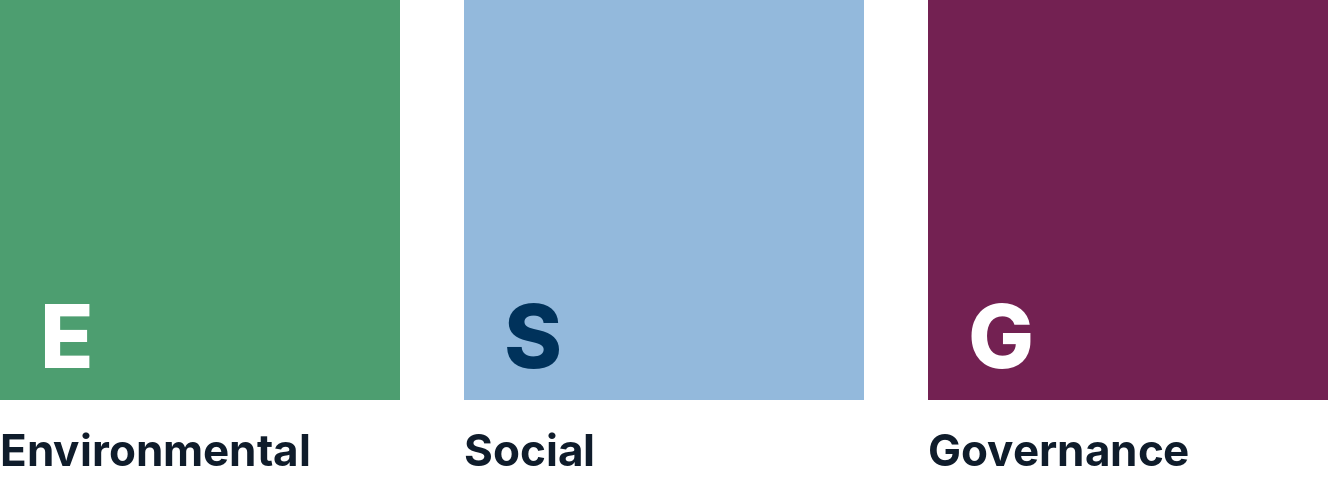
Environmental
We focus on understanding and reducing our environmental impact across our operations and value chain. This includes improving the quality and scope of greenhouse gas emissions data, strengthening internal awareness, and building a clearer view of our impact.
As a software product company, Consafe Logistics’ environmental impact is mainly connected to our own operations and value chain, including suppliers and the use of our software. Our products also provide the opportunity to support more efficient warehouse operations: they help customers improve resource utilization, optimize flows, reduce unnecessary movements, and make better use of warehouse space.
reduction in Scope 1 emissions through changes in company vehicle fleet
of electricity consumption in our operations is covered by renewable sources
reduction in pick routes with Astro WMS® Pick Route Optimization
Social
Our social sustainability work focuses on our employees. As a knowledge-driven company, our people are central to our ability to deliver value to customers and operate as a trusted long-term partner. We aim to provide a workplace that supports development, well-being, inclusion, and long-term engagement.
Our work is guided by four focus areas:

A Diverse and Equal Workplace
Promoting equal opportunities and creating an inclusive workplace where different backgrounds, perspectives, and experiences are respected and valued.
A Safe and Healthy Workplace
Promoting well-being, work-life balance, and a psychologically safe environment.
A Workplace for Individual Growth
Supporting continuous learning, role development, and long-term career
growth, enabling employees to grow with the company.
An Engaging Workplace
Fostering collaboration, connection, and a strong sense of belonging across teams and locations.
Governance
Governance supports the way we operate as an ethical, transparent, and responsible company. It provides the foundation for decision-making, risk management, and long-term value creation.
Our approach is supported by clear roles, policies, and internal controls, ensuring accountability across the organization. Sustainability is integrated through defined responsibilities and regular follow-up.

Information Security & Data Protection
We maintain high standards of information security across all business areas and is ISO 27001 certified, supporting a structured approach to managing risks and protecting customer data.
Ethical Business Conduct
Our Code of Conduct defines expectations for integrity, transparency, and responsible behavior.
Continuous Improvement
We continuously develop our policies, processes, and governance structures to meet evolving expectations.
Sustainability Milestones
from 2025
Understanding our impact and continuously improving how we manage it remain key priorities. In 2025, we focused on strengthening the foundations established in previous years and further developing our sustainability approach. Key milestones include:
Strengthening Greenhouse Gas Reporting
We improved the quality and scope of our greenhouse gas emissions data, expanding our reporting to better reflect how our solutions are used. This gives us a clearer understanding of our impact.
Advancing Sustainability Governance
We introduced a new Sustainability Policy, updated our Code of Conduct, and further developed our internal governance structures.
External Benchmarking and Transparency
We completed our first EcoVadis sustainability assessment. EcoVadis is a widely used sustainability ratings platform that assesses companies’ environmental, social, and governance practices and is commonly used by customers in procurement and tender processes. The assessment provides an external benchmark of our sustainability practices and enables standardized sustainability information to be shared with customers.

Our sustainability commitments, progress, and results
Explore our 2025 Sustainability Report to see the actions we're taking,
the progress we've made, and the goals we're working toward.
Customer insights
Want to become more sustainable in your supply chain and logistics operations? Learn from our customers' experiences! We teamed up with Supply Chain Effect and created a video interview series where Ahlsell, SKF and Brødrene Dahl share their insights on sustainability and logistics.
SKF
Brødrene Dahl
Ahlsell

Let's talk sustainability
Have questions about our sustainability efforts?
We're happy to help.
Nikolina Strahinic
Senior Sustainability Specialist nikolina.strahinic@consafelogistics.com
FAQ
How can a warehouse management system support more sustainable warehouse operations?
Reducing unnecessary movements, energy consumption, and material waste can make warehouse operations more sustainable. A warehouse management system (WMS) can support these improvements by helping companies use resources more efficiently. For example, Astro WMS® helps warehouses optimize picking routes, reduce unnecessary goods movements, and make better packaging decisions, supporting more efficient and sustainable operations.
How can a WMS help reduce energy consumption in warehouses?
Moving goods around a warehouse requires energy, especially when forklifts and other material handling equipment are involved. A WMS can help reduce unnecessary travel distances and associated energy consumption. For example, Astro WMS® helps optimize picking routes and goods movements, allowing warehouses to move goods more efficiently while using less energy for transportation within the warehouse.
How can a WMS help reduce packaging material and empty space in shipments?
Excess packaging and unused space in shipments increase material consumption and can contribute to unnecessary transportation emissions. A WMS can help warehouses make more efficient packaging decisions. For example, Astro WMS® helps select suitable packaging based on shipment requirements, reducing unnecessary empty space and packaging material.
What is Consafe Logistics doing to reduce emissions from its own operations?
Consafe Logistics is increasing fleet electrification and renewable electricity coverage. In 2025, Scope 1 emissions from company vehicles decreased by 44% compared with 2024, and 84% of electricity consumption in our operations was covered by renewable sources. We report emissions and progress in our annual sustainability report.
Does Consafe Logistics have science-based climate targets?
Yes. Consafe Logistics has near-term targets validated by SBTi Services. By 2035, compared with 2024, we commit to reduce absolute Scope 1 and Scope 2 emissions by 71.8%, and absolute Scope 3 emissions from purchased goods and services and business travel by 30.2%.
Has Consafe Logistics been assessed by EcoVadis?
Yes. Consafe Logistics has completed an EcoVadis sustainability assessment. It provides an external assessment of our sustainability management practices and helps identify areas for improvement. Customers can contact our Senior Sustainability Specialist for further information about the assessment.
What should companies look for in a sustainable WMS provider?
Companies should look for measurable climate targets, transparent reporting on progress, and clear responsibility for delivering on sustainability commitments. Responsible practices toward employees, suppliers, and customers also matter. Published sustainability reports and external assessments help customers evaluate this work. For a long-term partnership, look for a provider that shares relevant information, discusses changing sustainability requirements openly, and demonstrates continuous improvement.